
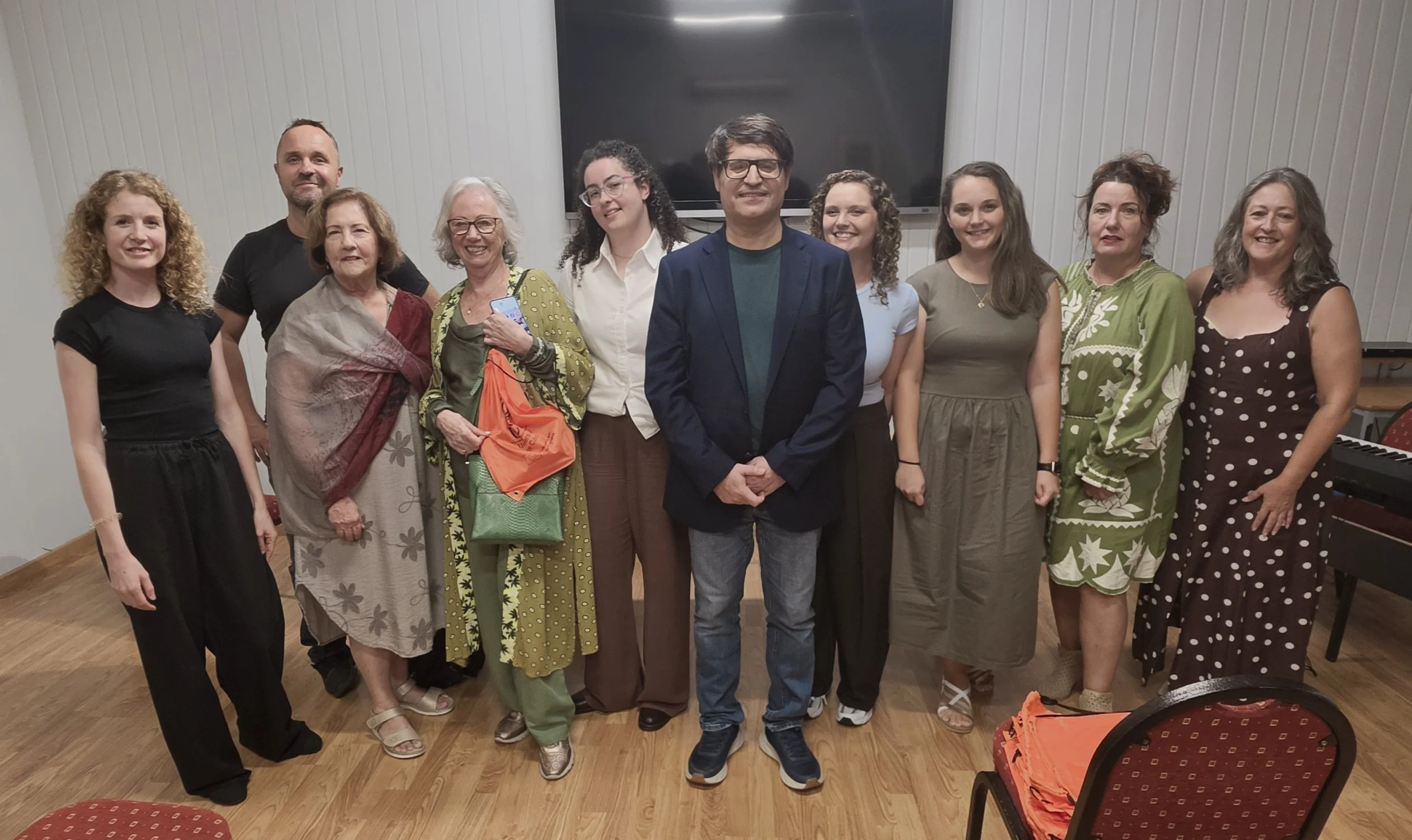
From left to right: Tessa Rosado Standen, Giordano Durante, Marisa Salazar, Sonia Golt, Sheridan Povedano, Professor Rafael Vélez Nuñez, Natalie Montegriffo, Amy Montegriffo, Rebecca Calderon, Jackie Anderson.
Jackie Anderson was among a number of Gibraltar’s women writers to participate in a seminar held on Friday 9th October in Gibraltar’s John Mackintosh Hall. The seminar focused on writing by women in Gibraltar and was then followed by an illuminating recital of works by women writers, demonstrating the variety, skill, thematic and stylistic range that have to date only received little public attention.
Jackie Anderson was joined by Amy Montegriffo, Jackie Villa (who unfortunately was unable to attend but whose extract was read by Jonathan Teuma), Marisa Salazar, Natalie Montegriffo, Sheridan Povedano, Sonia Golt and Tessa Rosado, each reciting a number of their poems and by Rebecca Calderon who recited a poem accompanied on the piano by Stéphane Dominicy and also sang one of her songs.
Contributions to the seminar were also received from Leyla Costa Gomez, Sophie Macdonald, Davina Barbara and Naomi Duarte who participated in the research that led to the seminar, athough they were unable to attend the recital.
The event was sponsored by Gibraltar Cultural Services Ltd on an initiative led by Professor Rafael Vélez Nuñez from the University of Cádiz along with Professor Castillo Garcia from the University of Castilla La Mancha.
The event opened with an overview of contemporary Gibraltarian writing from Giordano Durante, himself a writer and editor of Patuka Press, who discussed the most significant works published by local writers since 2019, describing that period as being the start of an “explosion of writing” in Gibraltar. He summarised the prevalent themes that emerged from the works of the past seven years, which include identity, belonging and home, sometimes coloured by nostalgia possibly emerging from the rapid changes that Gibraltar has been undergoing. He also alluded to the increasingly dynamic use of language, with language choices beginning to vary from the prevalent English and now including works in Spanish and in Llanito.
Mr Durante’s presentation also speculated the challenges faced by local writers, among these the limited opportunities for publication and being obliged to take up the more complex process of self-publishing. Local writers, he believes, are now having to face, as do writers globally, the challenges posed by AI.
Professor Vélez Nuñez presented the results of the research saying that he hoped that this would be the start of further research and that it might provide an insight into women’s writing in Gibraltar and spark off further development. He suggested that the seminar, while not strictly speaking a traditional academic event, would be interpreted as a meeting point between “availability and visibility” adding that he hoped that Gibraltar would see this as a starting point to “know and value these talented women”.
The research demonstrated that women’s literature in Gibraltar is “a dynamic mix of individual perspectives influenced by different backgrounds, genres and generations”. Women’s writing explored motherhood, domestic routines, family recipes. everyday language, exulting in stories passed down from by grandmothers and mothers as a form of preserving cultural memory. The Rock’s own unique landscape, culture, language and social dynamics were also evident as influencing the writers’ choices of theme and stylistic expression in their work, alongside more universal themes such as womanhood and the feminist perspective.
The poems presented during the recital offered a snapshot of women’s perceptions of their lives in Gibraltar and the influences and experiences that have shaped them, from universal themes such as love, birth, death, memory, grief to more specific themes such as place, with the border and the experiences of being enclosed in a small space a subject that surfaces across Gibraltar’s literature.
Professor Vélez Nuñez noted that, '“Although Gibraltarian women writers reject the idea of a unified literary canon in favour of independent voices, their work is collectively bound by shared engagements with border identity, multilingual code-switching, and the urgent preservation of domestic ‘herstory’ within a historically patriarchal landscape.” He concluded that Gibraltar’s women authors “are establishing an important space within Gibraltarian letters.”
The event proved popular, with almost every seat available taken up by an appreciative audience. After the recital, the event became an opportunity for writers to connect, and in some cases, reconnect, with each other. Importantly, it also provided an opportunity for the poets to discuss their writing and their aspirations as writers. Many expressed a desire to continue that connection, to support each other and leave behind the isolation that can occur to women writers, who squeeze writing into small pockets of time in their otherwise busy lives and who often sacrifice connection for caring responsibilities. It is hoped that, as Professor Vélez Nuñez had expressed, the event leads not only to greater interest and understanding of Gibraltarian women’s writing, but to a creating greater opportunities for developing women’s writing and perhaps to another ‘explosion’ of literary output in Gibraltar.
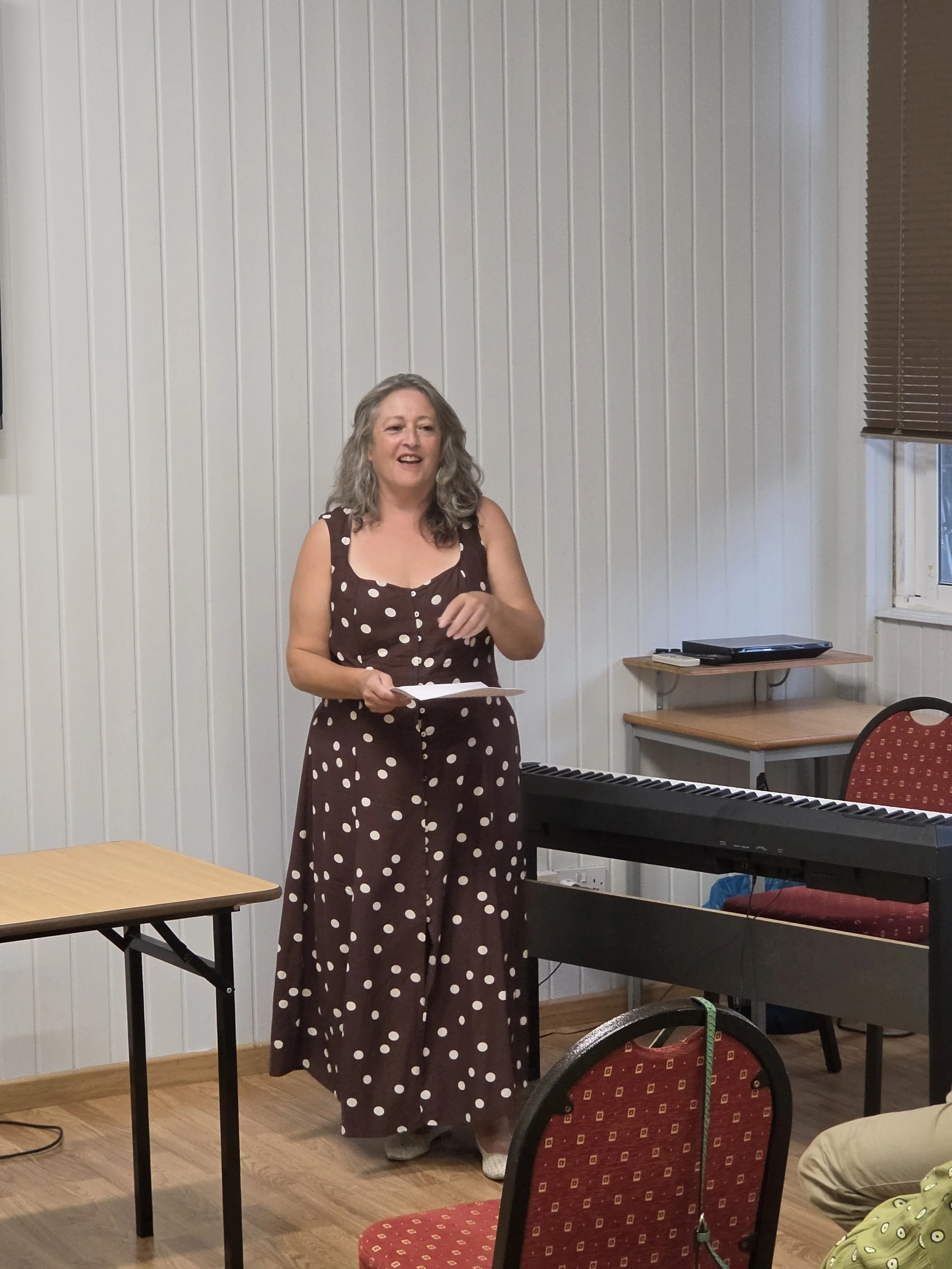
Jackie Anderson, reciting her poem “Our Woman”